Universal announces Fast & Furious: Hollywood Drift for Orlando Resort... Thoughts and Discussion
On July 12, 2023, Universal Destinations and Experiences announced an ambitious world's first coaster for its Hollywood park: Fast & Furious: Hollywood Drift. Manufactured by Intamin, the attraction immediately stands out as the fastest coaster ever built for a Universal property. Construction progressed rapidly on the 4,100-foot-long track. Testing has been ongoing, with the attraction aimed to open later this year. Arguably, this could be one of the most intriguing coasters to ever open.
Over 2,000 miles away in Florida, the removal of Hollywood Rip, Ride, Rockit has been completed. Universal had announced the closure of one of the park's most well-known attractions, after having operated since 2009. It had developed a reputation for its roughness and reliability issues. A replacement was necessary to help bolster the Studios park, which had fallen behind both Islands of Adventure and Epic Universe in terms of development.
A teaser had been released by the park for a January 20th announcement, featuring a speedometer graphic. Most fans had already assumed that the teaser pointed to a Rip Ride Rockit replacement (say that three times fast). While many believed that another Fast & Furious themed attraction was possible, since the park already was operating Fast & Furious Supercharged, some also believed that a Back to the Future theme was a candidate.
In the end, the park announced Hollywood Drift, a very similar attraction to the Universal Hollywood version, with some unique elements specifically to fit in the Florida park's space, including a 170 foot tall spike near CityWalk. Here are some thoughts on the announcement:

A Focus on Thrills, not Screens
It has always been an importance for Universal Orlando to define its niche, with intense competition from Disney at play. While Disney's audience is wide, they excel at focusing on family friendly attractions- especially ones that younger guests can enjoy. Universal has always focused much more on teenager and adult guests. Throughout the 2000s and 2010s, Universal had expanded their focus on motion simulator and 3D/4D effect attractions, with additions such as The Simpsons, Fast & Furious Supercharged, Skull Island: Reign of Kong, and Race Through New York among several others.
It's quite possible that Universal wanted to capitalize on the success of an attraction such as The Amazing Adventures of Spiderman. Upon its opening in 1999, the ride received excellent feedback for its innovative ride system and seamless integration of physical sets with on-screen effects. More recent additions have not received the same critical acclaim. Fast & Furious Supercharged specifically can be regarded as a failure, with company CCO Thierry Coup regretting his approval of the project. The public had made it known that they would not be as accepting of any more attractions that consisted of just screens, not excitement. At a certain point, the novelty wears off—movies are best left in theaters, not replicated wholesale on rides.
In recent years, Universal has pivoted back toward roller coasters. Between the opening of Hagrid's Magical Creatures Motorbike Adventure in 2019 and VelociCoaster in 2021, both attractions have received wonderful reviews. VelociCoaster is held in an extremely positive light, being one of the top-rated coasters on the planet. This approach represents a winning formula. It not only clearly differentiates Universal from Disney’s parks, but also plays to Universal’s strengths—namely, its ability to pair high-intensity ride systems with detailed theming and strong intellectual properties.
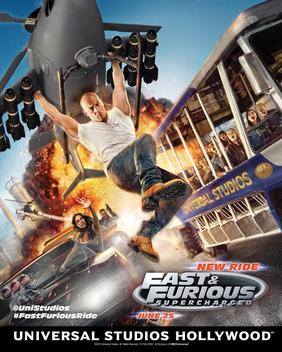
Universal is not afraid to admit recent failure
Modern attraction investments are not cheap, when at the immersive level that Universal aims to achieve. It is not uncommon for some of these attractions to cost over $100 million to develop. Every attraction is a critical investment that represents a long-term gamble. Return on investment (ROI) is not something that is done overnight. The larger a capital investment is, the longer it will take to recover that funding. While some smaller parks may return their investment on a small flat ride in a single year, for large operators, several years is the more likely target. For large operators using a pay-one-price (POP) admission model, ROI calculations are especially complex. Revenue must be justified across attendance, in-park spending, and hotel stays rather than being directly tied to individual attraction ticket sales.
Nobody knows the insider calculations of Universal's financials, but it is quite possible that Fast & Furious: Supercharged had reached a point where they were "satisfied" with the attraction's overall return at this point. Upon its likely closing in 2027, it will not have even operated for 10 years, which is uncommon for most "major" attractions. Depending on the model used, the ride may not have exactly "paid itself off" yet either. Even so, this decision would indicate that Universal is willing to cut its losses, acknowledge shortcomings, and prioritize future growth rather than cling to underperforming attractions.
The theme park business is a difficult industry to predict feedback, attendance, etc. Walt Disney’s own gamble with Disneyland in 1955 was famously met with skepticism, with many convinced it would fail. Parks battle to develop the newest, best, most immersive technologies, hoping for the publicity, but it doesn't always pan out. Universal is taking a big step here to admit that their "screen rides" of the 2010s are not the way to move forwards at this point. Instead of taking the easy route and simply replicating the product over and over with different IPs masked over them, they have taken strides to develop their newest dark rides, coasters, and motion simulators going into the 2020s.
The uniqueness of Universal Hollywood vs Universal Orlando
To me at least, Universal Hollywood is such an anomaly from the other Universal Resorts worldwide. It's a standalone park that struggles to offer exclusive, destination-level attractions. Of course, this is mainly due to the constraints with land availability in California limiting the total size of the resort. Regardless, most of the attractions featured at the Hollywood park are clones of others from around the chain. Only the Studio Tour and Secret Life of Pets rides remain unique to just that park.
Fast & Furious: Hollywood Drift could have been a standout attraction meant just for Universal Hollywood that would actually entice guests to the park. Now that it will also be featured in Orlando, it dilutes the market. I'm not saying by any means that Universal Hollywood struggles with attendance. It remains ranked 16th worldwide, welcoming 8.7 million visitors in 2024, and it sees around 90% of the attendance that its Florida counterpart receives. However, here's a sort of analogy to go along with my train of thought here... If I were to live in Texas, somewhat equidistant between Orlando and Hollywood, and money aside I wanted to visit one of the Universal Resorts, between both US options which one would I likely choose? Hands down, the Orlando Resort just offers more to do, basically everything you can do in Hollywood, and make a multi-day stay out of it.
Maybe for someone who really enjoys the Fast & Furious series, a unique attraction may push that fan over the edge of choosing Hollywood. I think that Disney itself does a good job of offering both unique and beloved experiences at their Orlando and Anaheim parks. There's enough of a difference in Anaheim for somebody to justify possibly wanting to see both US resorts at some point. Universal Hollywood is not a complete product by itself, its simply just another attraction in LA.
Of course, I do understand the constraints at play there, but with the money that Universal has, I wouldn't say anything is impossible. Another gate, or simply an expansion of the current property would do amazing for the company. At the end of the day, they may just be happy with what they're still getting attendance-wise in a saturated market.

Florida's Studio Park needs some TLC
Out of the three dry parks at Universal Orlando, the flagship park is the one most due for a major revamp. Islands of Adventure arguably opened as the most "complete" park in 1999, and Epic Universe despite being brand new is quite expansive, with plans already in-place for future development. I have heard some people complain about Islands of Adventure being dated. Yes, I agree that is the case in many parts not seeing much change in 25 years, but it will be somewhat straightforward to reskin some areas of the property to modernize them. In recent times, some large scale attractions have gone in.
Let's take an area such as the barren Lost Continent area. It seems that there are some plans to reskin that area of the park into something completely new, such as a Zelda themed world. Once that project is complete, some of the aging Islands can go down one at a time for revisions, without losing essentially any capacity elsewhere.
Universal Orlando in itself has seen more investment into individual attractions lately, but not many have seemed to stick. Unlike the massive coasters that are going up at IoA, Orlando's simulator and screened rides have not been up to snuff. The new Hollywood Drift ride should awaken Universal into putting more investment into its original park at the resort. Mistakes in recent years need to go in favor of much better and more beloved attractions. I think that with some of the most recent investment, the chain is heading in the right direction. I would love to see in the coming years, more of these dated simulators close in favor of truly unique and immersive experiences. Nobody is saying that they need to replicate a certain formula for attractions. They simply need to take advantage of certain IPs that are beloved (in my mind Universal is much more suited to the IP attractions than other places) and create attractions that will meet their target audiences.
What's Next
Universal is currently in heavy expansion mode, with a full resort planned for the UK, as well as a Kids Resort in Texas, among several smaller projects. I think that they have the right idea in mind driving this mentality. So far, every major project that they have undertaken since around 2019 (post-screen rides) has been a success. Strategically, they are developing in areas that have a large population to pull from, while avoiding direct competition with other "big names" in the industry.
On the home front, plans already exist and are rumored for utilizing brands such as Pokémon, Wicked, Zelda, and James Bond for attractions. I think that it is important despite the buzz surrounding Epic Universe, with the next phases already in planning that the other parks must not be forgotten about. Yes, Islands of Adventure and Universal Orlando are successful on their own, but you do not want to run into the notion of "Let's go to just Epic Universe. The other parks haven't changed at all." Universal should be trying to directly compete in the multi-day stay department. They have jumped leaps and bounds with the recent openings of Volcano Bay and Epic Universe. Disney's expansion pace has been noticeably slower, with Animal Kingdom being the most recent gate, a year older than Islands of Adventure.
Expansion does no good if you are neglecting what has already been built and letting it age. With as bustling as Orlando is, offering more to see and do than what can feasibly be done in a week's vacation, most guests are concerned over what is the latest and greatest offerings. There is a fine line between a beloved legacy attraction that is a "must ride every time" and "yeah, we've done that one before it wasn't that great." Therefore, it is crucial to act upon some of these recent attractions that are shortcomings, and reutilize their space for the next big thing. For myself personally, when I go to Orlando, usually Disney is the biggest reason to justify multiple days. While I've done small overnight trips to Universal, it nowhere near justifies trips of the same length. Usually now, it's just a pop-in to ride something specific or see something new. This is the exact reason for the need to modernize and expand. Pushing those boundaries of marketing yourself as the true reason for someone's visit to the area as opposed to the sideshow attraction is the exact way Universal can drive their future investments.


Comments
Post a Comment